

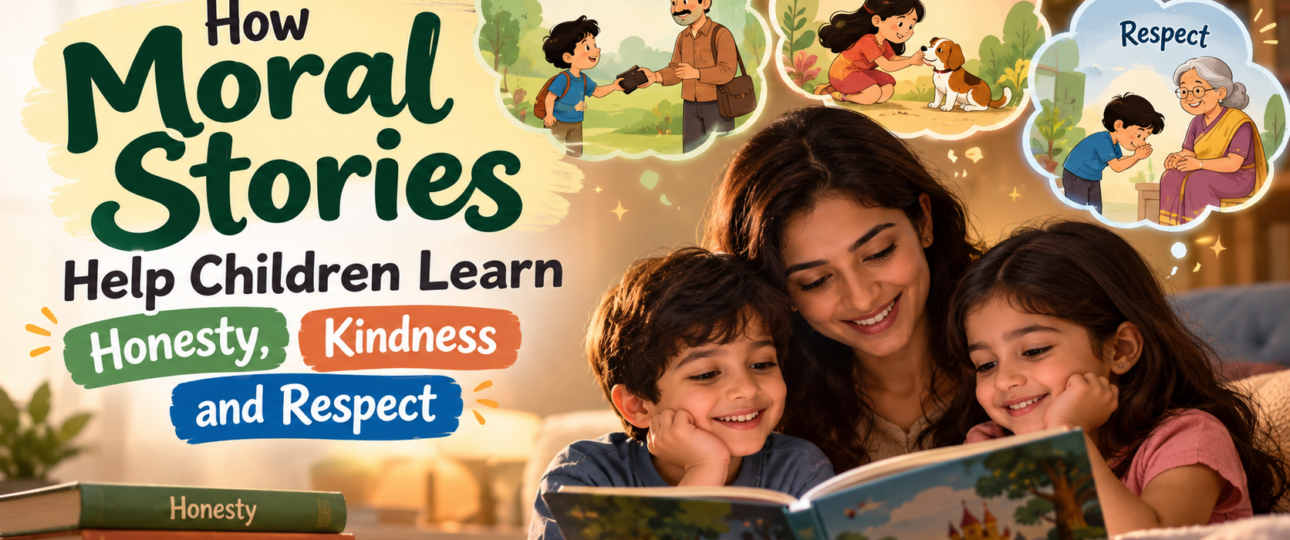
Children often learn more from a story than from being told what they should do. When a character tells the truth, helps a friend, or treats someone badly, children get to see what happens because of that choice. Moral stories for kids bring everyday problems into a form that young readers can understand. Parents can make these stories more useful by talking about them and showing the same behaviour at home.
Why Moral Stories Matter for Kids
Telling a child to be good does not always explain what being good means. A story about a child who finds a lost wallet or refuses to share a toy gives them something they can relate to. They can see how one action affects another person without feeling that someone is blaming them. This is one reason moral stories for kids are useful when teaching moral values. Children get the chance to understand the importance of doing the right thing instead of following rules only because an adult says so.
How Children Learn Values From Stories
While listening to a story, children notice what the characters say, how they behave, and what happens afterwards. They may even imagine themselves in the same situation. Parents can ask, “What would you do if this happened to you?” and let the child explain their answer. Moral stories for kids also give parents a chance to talk about why a character made a good choice. Children may be more willing to follow that example when they admire the character and want to behave like them.
How Stories Teach Honesty
Imagine a story about a child who accidentally breaks a friend’s pencil box. The child feels scared but finally admits what happened and offers to help replace it. Such a story shows that honesty matters even when telling the truth feels difficult. It also teaches children that making a mistake does not mean they should hide it.
Research backs up this idea. A study published in Psychological Science tested stories with children aged 3 to 7. The story about George Washington admitting that he damaged a cherry tree led to more truth-telling. Stories that mainly showed the bad results of lying did not have the same effect. When a child tells the truth, adults should notice it, respond calmly, and help them fix the mistake.
How Stories Teach Kindness

A child may not always notice when a classmate feels left out or upset. A story can make these feelings easier to understand. For example, a character who invites a lonely child to play shows how a small act of kindness can make someone feel welcome. After reading, ask the child how the lonely character might have felt before and after being included.
These stories also show that kindness is not limited to sharing toys or helping friends. It can mean listening when someone speaks, offering help, or telling an adult when another child is being hurt. Children learn that caring for others matters, but they do not have to agree to everything people ask of them.
How Stories Teach Respect
Children meet people with different ideas, habits, and ways of speaking. Stories can show what happens when someone makes fun of another person or refuses to listen. They can also give examples of taking turns, speaking politely, and looking after things that belong to others.
Moral stories for kids can help parents explain that respect works both ways. Children should treat other people fairly, but they should also be allowed to speak up when something feels wrong. Saying no to an unsafe request is not being rude. A child should know they can approach a trusted adult when they need help.
The Science Behind Storytelling and Child Development
Studies have found that reading stories together can support children’s social development. The results are encouraging, though a child’s age, home life, and culture may affect how they respond.
A 2025 study in Frontiers in Psychology included 60 children aged 4 to 5 and their parents. One group read picture books about social situations twice a week for eight weeks. The other group read books on different topics. At the end, children who read the social-themed books showed greater gains in empathy and helpful behaviour.
Another study by Iman A. Betawi involved 200 children aged 4 to 5 from three private preschools in Amman, Jordan. First published online in 2022 and included in a 2023 journal issue, the study in Clinical Child Psychology and Psychiatry found higher scores for empathy, honesty, respect, and courage among children who took part in a programme based on moral stories linked to Jordanian culture.
Research also suggests that children may respond better when they are encouraged to follow the example of a good character. Still, reading alone may not lead to lasting changes. Children need adults to discuss the lessons and show the same moral values through their own actions.
Mistakes to Avoid When Teaching Values
Do not stop after reading a story and expect a child to understand every lesson. Give them room to ask questions and share their views. Avoid calling a child bad when they make a mistake. Talk about what went wrong and how they can make things right. It is also better not to present every good action as something that must earn a reward. Children need time and practice to learn these lessons.
Everyday Habits That Support Moral Learning
What children see at home often matters as much as what they hear in a story. Parents can support learning through a few daily habits:
- Read moral stories for kids regularly and talk about the characters’ choices.
- Ask children what they liked about a character who showed kindness or honesty.
- Notice when children tell the truth, help someone, or treat others fairly.
- Listen to children without interrupting and say sorry when you make a mistake.
- Help children put things right when they hurt someone, such as returning a borrowed item or checking on a friend they upset.
The importance of these habits lies in giving children chances to use what they have learned. Families can also visit UNICEF India’s early childhood parenting resources for guidance on children’s growth and learning.
Conclusion
Moral stories for kids give children examples they can understand and talk about. A story may introduce honesty, kindness, or respect, but daily life gives children the chance to practise these values. When parents read with their children, listen to their questions, and lead by example, the lessons have a better chance of becoming part of how children treat others.
Looking for the best moral storybooks for your kids? Explore Nexus Stories and find engaging books that teach children honesty, kindness, respect, and good habits. Choose stories your kids will love reading while learning valuable lessons for everyday life.